Our Location
No. 66, Tongda Road, Economic Development Zone, Tengzhou City, Shandong Province, China

No. 66, Tongda Road, Economic Development Zone, Tengzhou City, Shandong Province, China
In medical equipment fabrication, there is no room for error. Accuracy, repeatability, and strict adherence to cleanroom protocols are paramount. Advanced press systems must deliver controlled force, comprehensive process traceability, and biocompatible material handling to ensure every component meets rigorous FDA and ISO 13485 standards.
Engineered for nitinol, titanium, 316L stainless steel, and medical-grade polymers (PEEK, silicone).
Sealed frames and servo-electric drives eliminate hydraulic fluid contamination risks in sterile environments.
Real-time signature analysis and force-distance curve monitoring for complete audit readiness.
Hydraulic and servo-electric presses are fundamental to shaping, assembling, and validating components across diverse medical sectors. Selecting the correct press architecture is critical for maintaining cleanroom integrity and dimensional accuracy.
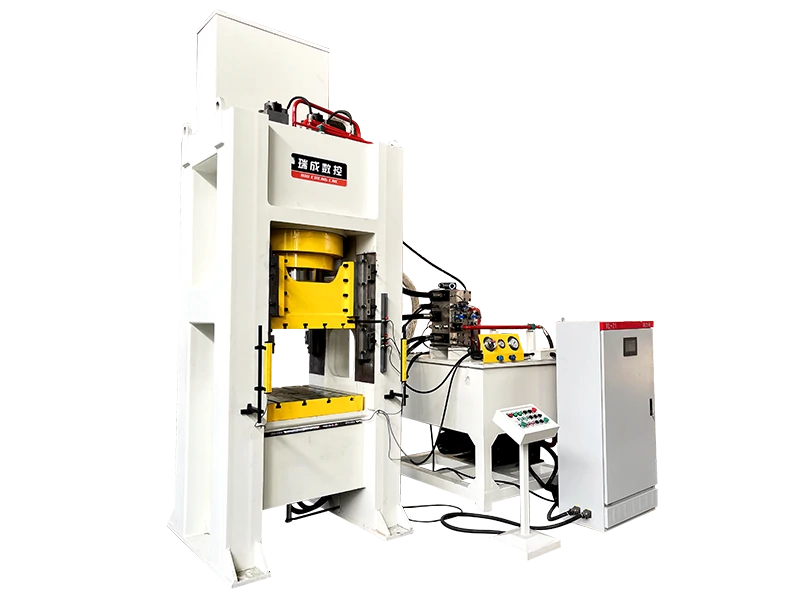
Orthopedic joints and bone plates require extreme dimensional accuracy. For the precision forging and deep drawing of titanium alloys, H-frame (straight-side) presses are frequently specified due to their superior rigidity and resistance to off-center loading.
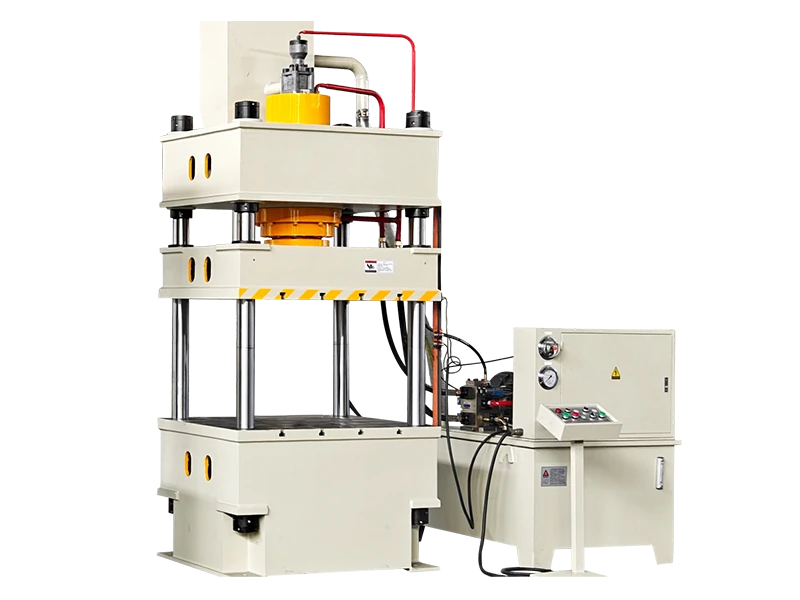
Diagnostic equipment casings (e.g., MRI or CT scanner covers) demand large, seamless structures. Four-column hydraulic presses provide the expansive daylight and unobstructed access required for forming these complex, large-format polymer or aluminum chassis.
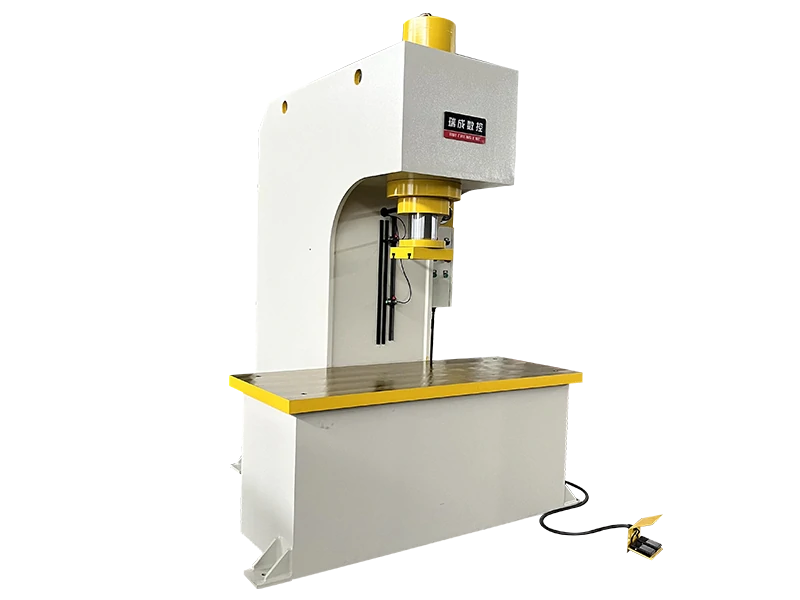
Low-tonnage, high-precision pressing is essential for joining wire leads to pacemakers or sealing catheter valves. C-frame presses are ideal for these high-speed, bench-top assembly operations, offering three-sided access for easy integration with automated feeders.
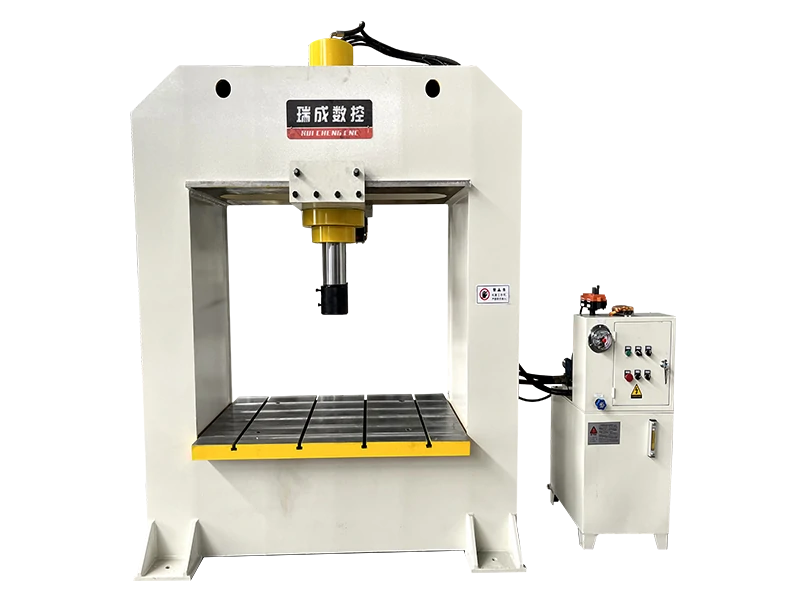
From tablet compaction to the fabrication of oversized sterilization chambers, presses ensure structural integrity. For ultra-large autoclaves or laboratory equipment bases, gantry hydraulic presses offer customizable, ultra-wide bed capacities without height restrictions.
Medical manufacturing demands immutable documentation. Press systems must inherently support quality management systems through advanced data acquisition.
Continuous monitoring of the force-distance curve during every stroke. Deviations outside pre-set min/max windows trigger immediate pass/fail notifications, preventing defective parts from advancing.
Automated logging of clamp force, platen position, temperature, and cycle timing. Data is exported and stored to satisfy FDA 21 CFR Part 11 and ISO 13485 audit requirements for every individual part.
Equipment designed with sealed enclosures, stainless steel contact surfaces, and electroless nickel plating to prevent particle generation and withstand rigorous chemical sterilization protocols.
Standard industrial presses cannot meet the stringent demands of medical device fabrication. Specialized architectural features are mandatory.
For low-tonnage assembly and micro-molding, servo-electric presses eliminate hydraulic fluid entirely. This removes contamination risks in cleanrooms while delivering unparalleled positional repeatability and programmable speed profiles.
High-resolution force sensors measure peak tonnage in real-time. When paired with position transducers, the system confirms that the desired tonnage was achieved within a precise, pre-set positional window, ensuring consistent part density and assembly integrity.
For PEEK, silicone, and thermoset medical components, presses feature multi-zone heated platens with uniform temperature distribution. Optional vacuum integration removes trapped gases, eliminating voids in critical seals and gaskets.
Presses are engineered to seamlessly interface with rotary index tables, pick-and-place robotic arms, and vision inspection systems, minimizing human intervention and maximizing throughput in controlled environments.
The equipment must eliminate contamination sources. Servo-electric drives are preferred as they remove hydraulic oil. Additionally, frames should feature sealed enclosures, stainless steel or epoxy-coated surfaces, and smooth geometries that prevent particle accumulation and allow for easy wipe-down sterilization.
Signature analysis maps the force applied against the ram position throughout the entire stroke. By establishing a “golden curve” during process validation, the press can instantly detect anomalies (e.g., missing components, material thickness variations) and reject out-of-spec parts before they leave the station.
Yes, if configured with modular capabilities. A robust four-column or H-frame press can handle the deep drawing of stainless steel surgical trays, while the addition of heated platens, temperature controllers, and vacuum systems allows it to perform compression molding of silicone medical seals.
Laboratory presses allow engineers to safely test material flow, cure behavior, pressure profiles, and vacuum requirements on a small scale. This de-risks the scale-up process by validating the forming parameters on equipment that shares the same fundamental control architecture as the production press.
Submit your component specifications, material requirements (e.g., Nitinol, PEEK, 316L SS), and regulatory constraints. Our engineering team will outline the optimal press architecture (C-frame, H-frame, Four-column, or Gantry) to ensure compliance, repeatability, and cleanroom compatibility.
Get Quote on WhatsApp